A social robot can speak, read a face, move through a room, or guide someone through a task. The hard part is showing that these actions work with real people, in real places, over time.
Shared tests should measure progress in the global race to build better social robots. Buyers need results they can check across machines and sites.
Quick read
- Social robots need tests for speech, movement, safety, and privacy.
- A smooth demo says little about long-term use with children, older people, or busy staff.
- Buyers should ask what the robot did, where it ran, and what still failed.
What a social robot has to do
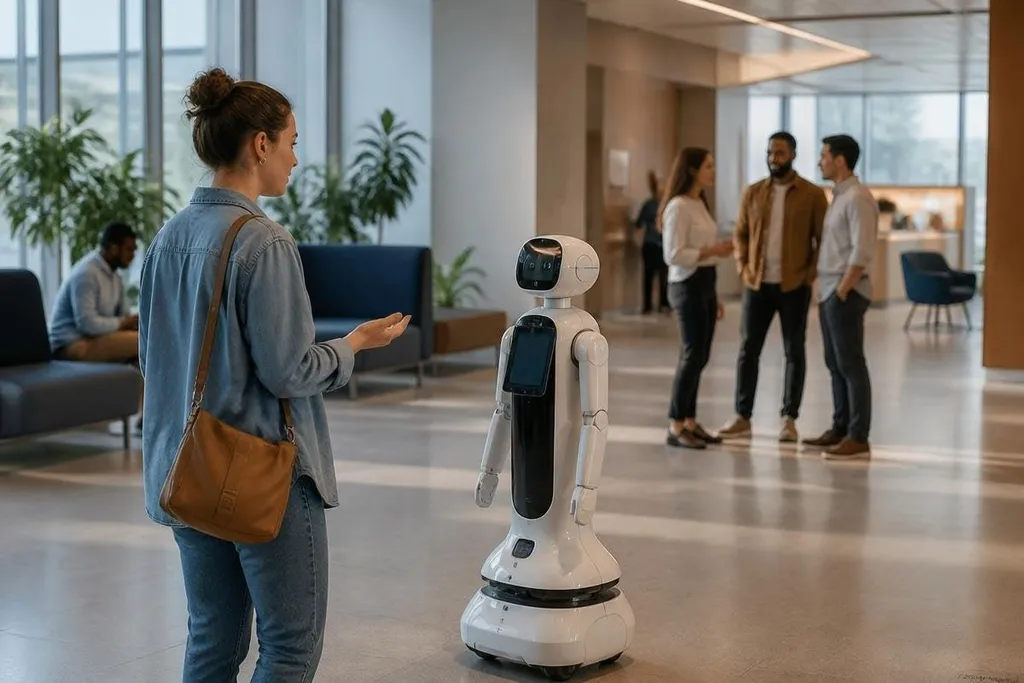
A social robot works near people and responds to human actions.
It may answer questions, guide visitors, teach a lesson, support care work, or help someone complete a task. Each job creates a different test.
Speech recognition matters in a quiet room. It matters less if the robot fails when two people talk at once, a television is running, or the speaker has an accent. A useful test records the setting, the number of people, the task, and the failure rate.
Movement creates another test. A robot that can stop in an empty hallway still needs to react when someone steps into its path. Its sensors must detect people, furniture, bags, wheelchairs, and changes in light without making the person manage every move.
Social behavior also needs limits. A robot can use eye contact, a voice, or a moving head to signal attention, but those signals can confuse people if the system does not understand the situation. The machine should state what it can do and ask for help when the task exceeds its software.
Why demos leave gaps
A short demo controls the room, the task, and often the timing. That makes it useful for showing a feature, but weak evidence for daily work. The test may not show what happens after a missed command, a blocked route, or a network failure.
Long-term use raises other questions. Does the robot need a staff member nearby? How often does it need charging? Can a technician fix a sensor without sending the unit back? Those answers affect cost more than a polished voice or a lifelike face.
Privacy adds a separate limit. Cameras and microphones may collect information about people who never agreed to use the robot. A buyer needs to know what the system records, where data is stored, how long it stays there, and who can view it.
A global race needs shared measures
Countries and companies may build different hardware, software, and business models. Their results are hard to compare when each team chooses its own task, room, users, and success measure.
A fair test could record the same basic facts across sites: task time, missed commands, human help, safety stops, battery use, and repair time. The test should also state who took part and whether the robot ran alone or under remote control.
That last point matters. Teleoperation means a person guides the robot from another location. A system may appear social and autonomous while a human handles the difficult moments off camera.
A social robot’s friendly reply says little about how it handles a missed command or a person who changes the task. Use Robot24 to check the model, trial setting, and result behind that claim before you compare prices and features.
What buyers should check
Before a school, hospital, hotel, or public service team buys a social robot, use this short check:
- Name the task: Write down the exact job, location, users, and expected result.
- Ask for the test: Request the setting, number of sessions, failure count, and amount of remote help.
- Check the limits: Find out what happens after a missed command, blocked route, sensor fault, or lost connection.
- Price the people: Count setup, supervision, charging, repairs, software fees, and staff training.
- Review the data: Confirm what cameras and microphones collect, where it goes, and when it gets deleted.
The strongest opposing view is that early demos help teams learn before formal tests exist. That's fair. A demo can show a useful idea, but it cannot carry the cost or safety case for a full deployment.
I’d judge a social robot by the work it can repeat without hidden human help, not by how natural its voice sounds once.
The next useful step is simple: publish task results with the robot model, test setting, human support, and failure count. Until those details become normal, the global race will produce more claims than clear answers.